Choosing the right conservatory style is one of the most important decisions when planning an extension or renovation. While all conservatories are designed to bring in natural light and connect indoor and outdoor space, the style you choose will affect how the space looks, feels, and functions day to day.
Among the most popular options, lean-to, Edwardian, and Victorian conservatories each offer distinct advantages. Understanding the differences between them can help you select a design that suits both your property and how you intend to use the space.
What is a lean-to conservatory?
A lean-to conservatory is one of the simplest and most practical designs available. It features a single sloping roof that leans against the main property, creating a clean and understated appearance.
Often chosen for modern homes or properties with limited space, lean-to conservatories are known for their versatility. Their straightforward structure allows them to fit neatly against bungalows, smaller homes, or areas where height restrictions may apply.
In terms of usability, a lean-to conservatory works well as a dining area, kitchen extension, or additional living space. The design maximises usable floor area without unnecessary complexity, making it a practical option for everyday use.
For homeowners comparing styles in more detail, the Conservatory Styles page provides a useful overview of how lean-to designs compare with other options.
What is an Edwardian conservatory?
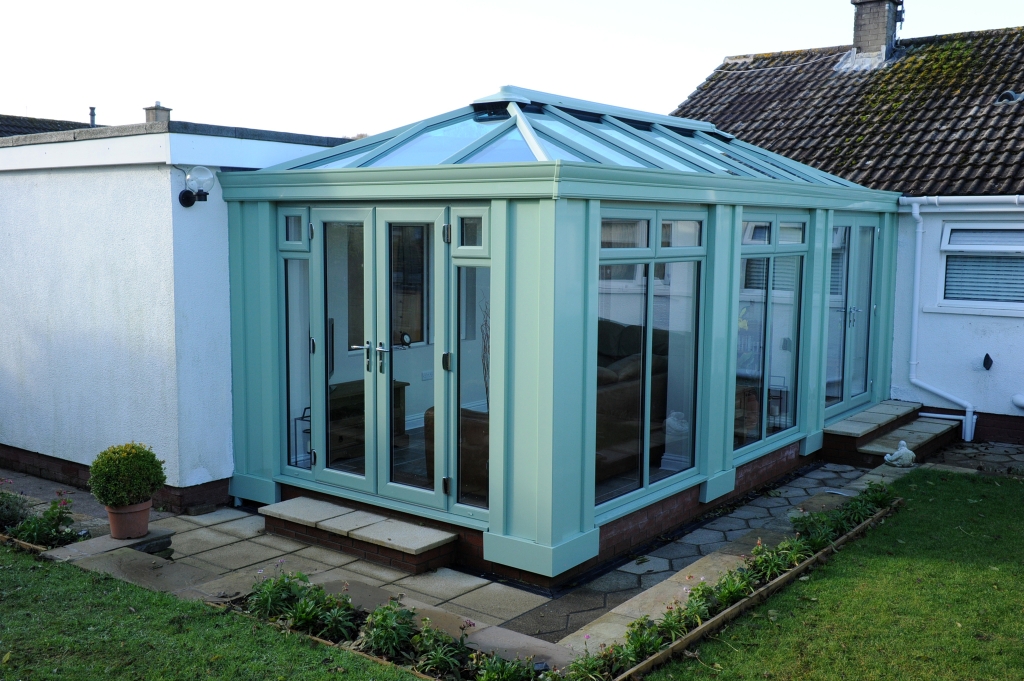
An Edwardian conservatory is defined by its square or rectangular shape and symmetrical structure. Unlike more decorative designs, it focuses on simplicity and functionality, making it one of the most versatile conservatory styles available.
The flat front and clean lines of an Edwardian conservatory make it easy to furnish, as there are no curved walls to work around. This makes it particularly well suited for homeowners who want a space that can be used as a dining room, lounge, or even a home office.
Because of its practical layout, an Edwardian conservatory is often chosen by those who want to maximise internal space while maintaining a traditional appearance. It strikes a balance between classic design and everyday usability.
If you are considering this style, exploring Edwardian conservatories in more detail can help clarify how they work across different property types.
What is a Victorian conservatory?
Victorian conservatories are one of the most recognisable styles, known for their ornate detailing and distinctive bay front. Typically featuring three or five facets, this design creates a curved appearance that adds character and visual interest.
This style is particularly suited to period properties, but it can also work well on modern homes where a more decorative finish is desired. The angled design can create a softer, more relaxed space, often used as a sitting room or garden-facing retreat.
While Victorian conservatories are visually striking, their shape can make furniture placement slightly more challenging compared to Edwardian designs. However, for many homeowners, the aesthetic appeal outweighs this consideration.
To explore how this style can be adapted for different homes, the Victorian conservatory pages provide further inspiration.
Comparing the three styles
While lean-to, Edwardian, and Victorian conservatories all serve the same core purpose, their differences become more apparent when considering layout, aesthetics, and practicality.
A lean-to conservatory offers simplicity and works particularly well where space is limited. An Edwardian conservatory provides a balanced, functional layout that suits a wide range of uses. A Victorian conservatory focuses more on visual impact, adding character through its shape and detailing.
The right choice often depends on your property style, available space, and how you plan to use the room. For example, a home office or dining space may benefit from the clean lines of an Edwardian design, while a relaxation space may suit the softer shape of a Victorian conservatory.
Modern conservatory design considerations
Beyond style, there are several practical factors to consider when planning a conservatory. Insulation, glazing, and ventilation all play a role in how comfortable the space will feel throughout the year.
Modern conservatories are designed to be more energy efficient than older builds, with improved materials helping regulate temperature and reduce glare. This makes them more suitable for year-round use, rather than purely seasonal spaces.
It is also worth thinking about how the conservatory will connect to the rest of the home. Open-plan layouts, flooring continuity, and access points all influence how integrated the space feels.
Choosing the right conservatory for your home
Selecting the right conservatory style comes down to balancing aesthetics with practicality. While it is easy to focus on appearance, the long-term success of the space depends on how well it supports your day-to-day needs.
A lean-to conservatory may be ideal for a clean, modern extension. An Edwardian conservatory offers flexibility and ease of use, while a Victorian conservatory provides a more decorative and traditional feel.
Taking the time to compare these options carefully will help ensure the final result feels like a natural extension of your home rather than an add-on.
Explore conservatory styles and options
If you are considering adding a conservatory, reviewing different styles in more detail can help you decide which approach best suits your property.
You can explore a range of options through the Conservatory Styles page, including lean-to, Edwardian, and Victorian designs, to see how each style works in practice.
If you would like guidance on choosing the right conservatory for your space, contact National Home & Garden to discuss your plans and requirements.